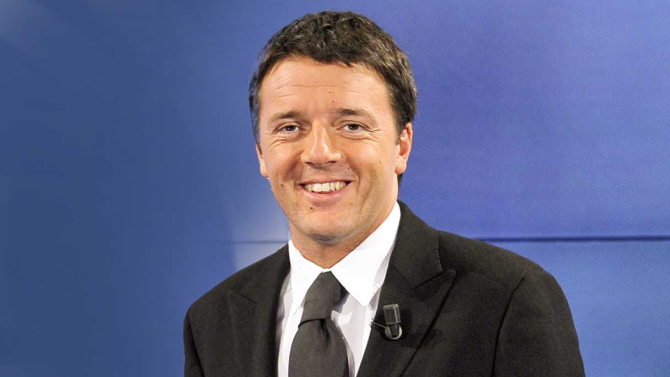
Every week we analyze a politician: promises, misdeeds, personal benefits and costs for citizens.
🔍 Why the system makes them all like this
Before analyzing this politician, we must understand the system they operate in. It is no accident that they all betray their promises. The system expects it.
📜 The legal articles that allow it
Article 67 of the Constitution
"Every member of Parliament represents the Nation and exercises their functions without a binding mandate."
This rule establishes that once elected, a member of parliament is not legally bound to keep their electoral promises. They can change party, position, or opinion without any legal consequence. Their "conscience" is the only constraint.
Article 68 of the Constitution
"Members of Parliament cannot be held accountable for opinions expressed and votes cast in the exercise of their functions."
This rule guarantees immunity for statements and votes expressed in Parliament. Even if statements are misleading or contrary to public interest, the politician cannot be prosecuted.
Verify on the official source:
Senato della Repubblica - Art. 67
|
Senato della Repubblica - Art. 68
📚 The theories that explain the system
Gaetano Mosca (1896) — In every society, regardless of the form of government, there is always an organized minority that governs an unorganized majority. Democracy does not eliminate this structure, it merely hides it.
Vilfredo Pareto (1901) — Elites circulate, but the power structure does not change. The people do not govern: only the group of elites occupying the government position changes.
Robert Michels (1911) — Even parties born to represent the masses inevitably end up being controlled by a small circle of leaders. Internal party democracy is an illusion.
"Who says organization, says tendency to oligarchy."
📊 The data that confirms the theories
These are not academic speculations. The data shows the system works exactly as described:
- Over 90% of the funding of Giorgia Meloni's party comes from contributions paid by MPs themselves, not from the general public.
Source:
Camera dei Deputati - Bilanci partiti
- The French government has spent over 2.5 billion euros on external consultants since 2017, a 329% increase in six years. McKinsey supported Macron's campaign in 2017 and then obtained government contracts.
Source:
Senato Francese - Rapporto McKinsey
- German Chancellor Scholz has been summoned multiple times as a witness by the parliamentary inquiry committee for the Cum-Ex case, a multi-billion euro tax fraud.
Source:
Bundestag - Commissione Cum-Ex
- 18.6% of Italians are at risk of poverty. 9.1% of families are in energy poverty (14.6% on the Islands). 25.6% cannot cope with unexpected expenses.
Source:
ISTAT - Rapporto povertà
When a politician betrays electoral promises, it is not an individual accident: it is the inevitable product of a system designed to ensure that the elite in power continues to govern. Articles 67 and 68 provide legal protection. The theories of Mosca, Pareto and Michels explain the deep mechanism. It is not the individual politician who is the problem: it is the system.
⚖️ confronto_titolo
confronto_intro
1. XQXQ
Personal Sovereignty says something simple: no one can decide about your life instead of you. Matteo Renzi was not elected by anyone. In 2014, the PD appointed him secretary. The President of the Republic, Giorgio Napolitano, appoints him to form the government. He's not parliamentary. He never asked a single Italian citizen to vote to become President of the Council. Yet, from 22 February 2014 to 12 December 2016, he decided to live 60 million Italians. How is that possible? Because the system allows it. The PD elects him secretary with 67.5% of the votes at the primary. But the primary is not elections. I'm an internal rite in the party. And the party, with its MPs, decides who goes to Palazzo Chigi. You have no say. Then the betrayal comes. In 2016, after defeating the constitutional referendum, Renzi announced: "If I lose the referendum I consider my political experience failed." Then he doesn't keep the word. Stay in politics. In 2019, he promoted the birth of the Count II government. In 2021, he dropped the Count II government to bring Draghi to Palazzo Chigi. In 2022, he helped drop Draghi. Every passage is decided by him, without consulting the citizens. In our system, you are the source of power. In his, power is an armchair that conquers itself with agreements, not with consent. Abyssal difference.
2. Equal Dignity
Renzi is the son of Tiziano Renzi, municipal councilman of Rignano sull'Arno for Christian Democracy from 1985 to 1990. He studied at Dante's high school in Florence (60/60) and graduated in Law in Florence (109/110). He worked in CHIL Srl, a marketing company owned by his family, until 2014. He participated in "The Wheel of Fortune" in 1994, winning 48.4 million lire. It's not a demerit. It's a privilege. A privilege that allowed him to become President of the Province of Florence at 29, Mayor of Florence at 34, Secretary of the PD at 38, President of the Council at 39. And while he built this career, his government did what? He approved the Jobs Act. Article 18 for new recruits. It created a double track between "guaranteed" and "precarious". He liberalized the determined time. It weakened the unions. The result? In 2024, the youth employment rate (15-34 years) was 43.7%, compared to an EU average of 50.2%. Over 1 million young people left Italy between 2011 and 2021. 48.2% of women employed have an involuntary part-time. The gender pay gap is 5.4% (43% on pensions). The unemployment rate in the South is 13.8%, compared with 5.9% in the North. His "equal dignity" is a two-speed dignity: one for those who studied at Dante and know the powerful, one for those who voted PD believing that something changed. In our system, no one is born with privileges. Everyone is born sovereigns.
3. Sovereign Consent
The Sovereign Consensus says: no one can be minority. If a decision doesn't suit everyone, we keep discussing. Renzi led the PD with 67.5% of the votes at the 2013 primary. 32.5% voted against him. What about that minority? She wasn't heard. She wasn't involved. It was simply ignored. His party management was leadership and authoritarian. His party comrades also said that. Stefano Fassina: "The new secretary has set forth fundamental reforms for the country, but accompanies them with an unacceptable intolerance towards the positions different from his". Massimo D'Alema: "If you go on the road to Renzi you go to the political disaster". Rosy Bindi: «If Renzi wants to run for the primaries he dismisses from the PD». And then the Jobs Act: an epochal reform, which has changed the lives of millions of workers, approved with the question of trust and with the vote against almost 40 Members of the PD. The minority of the party was not heard. And the result pays the workers still today. In our system, even one citizen who says "no" blocks everything. Because between rulers you do not win and you do not lose: you decide together. Renzi won. The others have lost. And the party became a personal office. We want everyone to win.
4. XQ
The Immune System serves to prevent a man from taking power. Immediate revocation, draw, incompatibility, short and non-renewable mandates. Automatic mechanisms, not good intentions. Renzi is the opposite. This is what emerged from the investigations: The Open Foundation — The Prosecutor of Florence has challenged Renzi and 10 other investigations of illicit funding continued through the Open Foundation, defined as "political-organizational articulation of the Democratic Party (renziana current)". The Foundation received €7.120.000 in seven years (2012-2018), outside the official PD budgets. The Bin Salman case — Renzi received 1.1 million euros from Mohammed bin Salman for "advices". The Bank of Italy reported suspicious operations. Renzi said he was "friend and personal advisor" of the Saudi Crown Prince. Insider trading — On CONSOB reporting, the Prosecutor of Rome opened an investigation for insider trading. In the call of 16 January 2015, Carlo De Benedetti informs his financial operator that Renzi warned him in advance of the bank decree. De Benedetti invests €5 million and earns €60,000 in capital gain. The defendants of the Court of Auditors — Renzi was sentenced several times for damages of the Court of Auditors: €14,000 in 2011 (later canceled), €15,000 in 2019 (later on call), €69,000 in 2022 for two employees assumed irregularly when he was mayor of Florence. The Renziana "Bestia" — In November 2021, an exchange of emails between Renzi, Fabrizio Rondolino and Marco Carrai reveals a project to "destroy the reputation and public image" of opponents through a site "to be built on a foreign server not subjected to Italian legislation", with "Israeli software, piloted friendships, fake profiles and fake news". Michels, a hundred years ago, had foreseen all this: the ferreous law of oligarchy. Every organization inevitably produces an elite that dominates it. Renzi is no exception. It is the living confirmation of the law. And the fact that the system protected it for 20 years is proof that the system is designed to allow it.
5. Sovereign Coin
The Sovereign Coin says: money is a public service, not a commodity. The Community issue it without debt. Private banks do not exist. Renzi never talks about this. He doesn't say where the money comes from for his policies. He doesn't say who finances his ascent. He doesn't say if he wants to break down the power of the banks or leave it intact. His financiers, however, speak for him: Mohammed bin Salman (Saudi Arabia): €1.1 million for consultations Delimobil (Russia): CdA in August 2021 Future Investment Initiative (Saudi Arabia): board member Davide Serra (Algebris): 175.000 € Guido Ghisolfi (Mossi&Ghisolfi): 125.000 € Alfredo Romeo (condemned for corruption): 60.000 € Paolo Fresco (former Fiat): 50,000 € Vincenzo Manes (KME): 62.000 € Fondazione CR Firenze: 11 million € invested in Algebris, the fund of Serra Inconvenient question: who pays his campaign? Who benefits from his policies? The answer is in the names: banks, funds, Saudi princes, Russian companies. In our system, the money is transparent and plotted. In its, it remains in the shadow — even when it is declared, because no one explains why.
6. Self-sufficiency
Self-sufficiency says: a sovereign people produces what consumes and consumes what they produce. Energy, food, technology, defense. Material addiction, not flags. Renzi says he wants a "superana" Italy. But then: Supports sending weapons to Ukraine Supports NATO Supports the EU He consults the Tony Blair Institute (after the end of the government) He is a member of the Future Investment Initiative, the foundation of Bin Salman Enters the Board of Delimobil (Russia) in August 2021 He resigns from Delimobil only after the invasion of Ukraine This is not sovereignty. It is subordination disguised as moderation. Renzi is a businessman who uses politics to do business, and business to do politics. His "soverranism" is a flag that winds as he collects the transfers from Riad. Vannacci says: "Let's change master." Meloni says: "We stay with the current master." Crosetto says: "We sell weapons to all masters." Salvini says: "Navy boy!" — but he never did. Schlein says: "Defensive weapons" — but does not say "no" to weapons. Magi says: "Weapons to Zelensky, otherwise we're not in the wide field." Count says: "No to the rearmament" — but supported Draghi. Renzi says: "I do business with Bin Salman." None of them say: "We have no masters." We do.
7. Time of Life
The Time of Life says: the only criterion that counts is the quality of time you spend on this earth. Not GDP, not productivity, not war. Renzi promised the Jobs Act to create a job. He created precariousness. He promised the Good School to improve education. He created precarious. He promised the constitutional referendum to change Italy. He lost. He promised to leave politics if he lost. He didn't. He promised not to make arrangements with the M5S. He did the Count II government. He promised not to make arrangements with the League. He did the Draghi government. In the meantime: 48.2% of women employed have an unwilling part-time The youth employment rate (15-34 years) is at 43.7% The gender pay gap is 5.4% (43% on pensions) The unemployment rate in the South is 13.8% Over 1 million young people left Italy between 2011 and 2021 This is his legacy: a Jobs Act that has precarised a generation, a Good School that has not solved the precarious, a failed referendum that has opened the way to the Meloni government. The time of Italian life was stolen twice: first to pay taxes, then to pay the bill of promises never kept. In our system, free time is the supreme criterion. Every hour spent working in a precarious contract is an hour of stolen life.
8. The politician as a school case
If Moscow, Pareto and Michels wanted an empirical case for their theories, they could not find it better than Renzi. Moscow said that in every society there is a political class that governs the disorganized majority. Renzi is a member of this class: son of a municipal councilman DC, studies at Dante, graduates in Florence, political career begun at 24 years as provincial secretary of the PPI. He spent his entire adult life in politics or in his surroundings. He is not a man of the people. He is a politician, the son of a system he learned to use to conquer and maintain power. Pareto said that the story is a cemetery of aristocracies and that the elite circulate. Renzi is the perfect example: the elite of the Florentine left who, after the season of Margherita and PD, recycled in centrist elite with Italia Viva. His ascent is not a revolution. It's elite circulation. Power changes shape, but remains in the same hands. Michels said democracy inevitably produces oligarchy. Renzi is the confirmation: a man who used the PD to build a personal power, who created two parallel foundations (Big Bang, Open) to collect funding outside the official balance sheets, which received 1.1 million from Bin Salman, who used his position to favor his financiers. His strength does not come from the people. It comes from its network of relationships and funding. It is the very definition of oligarchy: the government of few, for few, without the consent of the most. The fundamental difference: we want to disconnect the ferreous law of oligarchy. Renzi embodies her. And the fact that the system protected it for 20 years is proof that the system is designed to allow it.
9. The vote that brought you here
If you voted for Renzi or for the PD when he was secretary, know that you have abdicated sovereignty. You gave him your power. And he, once elected, is free to do the opposite of what he promised you. It is the Constitution itself that allows it. Article 67: "Every member of Parliament represents the Nation and exercises its functions without a mandate. "
→ Translated: electoral promises are ragged paper. He can betray you, legally. Article 68: Parliamentary immunity.
→ Translated: If you commit crimes, you need permission from your colleagues to process it. Together, they form the shield of Casta. The first one lets you betray. The second protects you while you do it. Renzi betrayed the promise to leave politics if he lost the referendum. He betrayed the promise of not making deals with the M5S. He betrayed the promise of not making deals with the League. He betrayed the promise to reform justice. She betrayed her promise to cut taxes. Five promises cheated on five. And the Constitution protects him. In Community of Sovereigns, all this does not exist. No immunity. No warrant without constraint. Who's wrong pays. Those who betray laugh. And who presents himself with a program that will not keep is not even allowed to do so. Because there are no elections. There are no campaigns. There are no promises. Only decisions taken together, as a peer, without masters.
Conclusion
Renzi is not a political opponent like others. It is the anti-Community of Sovereigns in its most accomplished form. Every principle is the denial of our principle: He wants the hierarchy. We equality. He wants the majority crushing. We are unanimity. He wants the boss. We the mechanisms. He wants propaganda. We are the truth. He wants the past. We're the future. He promised the Jobs Act to create a job. He created precariousness. He promised the Good School to improve education. He created precarious. He promised the constitutional referendum to change Italy. He lost. He promised to leave politics if he lost. He didn't. He promised not to make arrangements with the M5S. He did the Count II government. He promised not to make arrangements with the League. He did the Draghi government. And as he did all this, he cashed 1.1 million from Bin Salman, used the Open Foundation to collect 7.1 million out of balance sheets, and built a personal power system that is the exact opposite of Community of Sovereigns. Community of Sovereigns is the only possible answer. Not because it's perfect, but because it's the only one that doesn't reproduce the twists of the past. Renzi is the past that returns. We are the future that has yet to be born. The choice is clear. And it doesn't admit neutrality.
The Renzi system: parallel foundations
Matteo Renzi never used the PD to finance himself. He created two parallel foundations — Big Bang (2012-2013) and Open (2013-2018) — which collected funding outside the official party balance sheets. Big Bang (2012-2013) 2012: 814.502 € 2013: 886.208 € 2014 (6 months): 347.000 € Total: over 2 million euros in 30 months Open (2013-2018) 2012: 670.000 € 2013: 700.000 € 2014: 1.100.000 € 2015: 450.000 € 2016: 2.100.000 € 2017: 1.000.000 € 2018: 1.100.000 € Total: 7.120.000 € The Prosecutor of Florence has defined the Open Foundation as "political-organizational articulation of the Democratic Party (renziana current)" and has challenged Renzi and 10 other investigations of illegal financing continued. Who paid: Mohammed bin Salman (Saudi Arabia): €1.1 million for consultations Davide Serra (Algebris): 175.000 € Guido Ghisolfi (Mossi&Ghisolfi): 125.000 € Alfredo Romeo (condemned for corruption): 60.000 € Vincenzo Manes (KME): 62.000 € Paolo Fresco (former Fiat): 50,000 € Fondazione CR Firenze: € 11 million invested in Algebris The result: a parallel, occult financing system, which escaped the official balance sheets of the party and the rules on transparency. A system that allowed Renzi to build a personal power, to foster his financiers, and to remain in politics even after promising to leave. In Community of Sovereigns, this would not be possible. There are no parallel foundations. There's no hidden funding. There are no consultations with Saudi principles. Only sovereign citizens who decide together, as a peer, without masters. And no one can buy their voice.