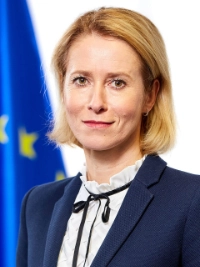
Every week we analyze a politician: promises, misdeeds, personal benefits and costs for citizens.
🔍 Why the system makes them all like this
Before analyzing this politician, we must understand the system they operate in. It is no accident that they all betray their promises. The system expects it.
📜 The legal articles that allow it
Article 67 of the Constitution
"Every member of Parliament represents the Nation and exercises their functions without a binding mandate."
This rule establishes that once elected, a member of parliament is not legally bound to keep their electoral promises. They can change party, position, or opinion without any legal consequence. Their "conscience" is the only constraint.
Article 68 of the Constitution
"Members of Parliament cannot be held accountable for opinions expressed and votes cast in the exercise of their functions."
This rule guarantees immunity for statements and votes expressed in Parliament. Even if statements are misleading or contrary to public interest, the politician cannot be prosecuted.
Verify on the official source:
Senato della Repubblica - Art. 67
|
Senato della Repubblica - Art. 68
📚 The theories that explain the system
Gaetano Mosca (1896) — In every society, regardless of the form of government, there is always an organized minority that governs an unorganized majority. Democracy does not eliminate this structure, it merely hides it.
Vilfredo Pareto (1901) — Elites circulate, but the power structure does not change. The people do not govern: only the group of elites occupying the government position changes.
Robert Michels (1911) — Even parties born to represent the masses inevitably end up being controlled by a small circle of leaders. Internal party democracy is an illusion.
"Who says organization, says tendency to oligarchy."
📊 The data that confirms the theories
These are not academic speculations. The data shows the system works exactly as described:
- Over 90% of the funding of Giorgia Meloni's party comes from contributions paid by MPs themselves, not from the general public.
Source:
Camera dei Deputati - Bilanci partiti
- The French government has spent over 2.5 billion euros on external consultants since 2017, a 329% increase in six years. McKinsey supported Macron's campaign in 2017 and then obtained government contracts.
Source:
Senato Francese - Rapporto McKinsey
- German Chancellor Scholz has been summoned multiple times as a witness by the parliamentary inquiry committee for the Cum-Ex case, a multi-billion euro tax fraud.
Source:
Bundestag - Commissione Cum-Ex
- 18.6% of Italians are at risk of poverty. 9.1% of families are in energy poverty (14.6% on the Islands). 25.6% cannot cope with unexpected expenses.
Source:
ISTAT - Rapporto povertà
When a politician betrays electoral promises, it is not an individual accident: it is the inevitable product of a system designed to ensure that the elite in power continues to govern. Articles 67 and 68 provide legal protection. The theories of Mosca, Pareto and Michels explain the deep mechanism. It is not the individual politician who is the problem: it is the system.
⚖️ confronto_titolo
confronto_intro
1. XQXQ
Kallas lent 350.000 euros to the society of the husband, who works in the field of transport to Russia, while she herself asked the "total blockade" of Russia. He stated that tax increases "can be described as a national defence fee". It increased military spending from 2% to 4.2% of GDP. Every decision Kallas made is a decision made for you. And you couldn't say anything. In our system, you are the source of power. In his, power is a defense fee you pay without being able to decide. Abyssal difference.
2. Equal Dignity
Kallas is the daughter of Siim Kallas, former Estonian Prime Minister and former European Commissioner. He studied law in Tartu. She worked as a lawyer. She was Minister, President of the Reformation Party, Prime Minister, and now High Representative of the EU. While she built this career, Estonian military spending increased from 2% to 4.2% of GDP, and citizens paid 796 euros per head for defense. The public deficit reached 4.5% of GDP. His "equal dignity" is a two-speed dignity: one for those who are the daughter of a Prime Minister and know the powerful, one for those who pay €796 for weapons. In our system, no one is born with privileges. Everyone is born sovereigns.
3. Sovereign Consent
Kallas increased military spending from 2% to 4.2% of GDP. He stated that tax increases are "a national defence fee". He proposed a plan for Ukraine that was rejected. He admitted that the EU "has not yet kept promises" on aid to Ukraine. In our system, even one citizen who says "no" blocks everything. Because between rulers you do not win and you do not lose: you decide together. Kallas imposed. We want everyone to decide.
4. XQ
Kallas is at the center of conflicts of interest documented: Loan of 350.000 euros to the society of the husband (transport towards Russia) Financing from arms companies: "millions of euro" according to experts Diplomatic incompetence: "It has no contact with the US," "it has excluded Europe from the negotiations" Michels, a hundred years ago, had foreseen all this: the ferreous law of oligarchy. The EU is no exception. Kallas is no exception.
5. Sovereign Coin
Kallas never talks about this. He doesn't say where the money comes from for his policies. He doesn't say who finances his ascent. The conflicts of interest, however, speak for her: the loan to the husband's society, the funding from arms companies. Inconvenient question: who pays his campaign? Who benefits from his policies? In our system, the money is transparent and plotted. In his, he remains in the shadows.
6. Self-sufficiency
Kallas says he wants a strong Europe. Then it increases military spending from 2% to 4.2% of GDP, with forecasting to exceed 5% from 2026. This means €796 per resident. The public deficit reaches 4.5% of GDP. This is not sovereignty. It is subordinate disguised as militarism. Estonia does not produce what it consumes for defence. It depends on foreign supplies. And Kallas pushes to spend even more. None of them say: "We have no masters." We do.
7. Time of Life
Kallas increased defense fees. He said that "income and VAT tax increases could be substantially described as a national defence fee." He admitted that the EU "has not yet kept promises" on aid to Ukraine. This is his legacy: more taxes, less welfare, more weapons, less rights. The time of Estonian life was stolen twice: first to pay taxes, then to pay the weapons. In our system, free time is the supreme criterion.
8. The politician as a school case
Moscow said that in every society there is a political class that governs the disorganized majority. Kallas is the daughter of a Prime Minister, studied in Tartu, was Minister, Prime Minister, and now High Representative of the EU. He is not a man of the people. He's a power professional. Pareto said that history is a cemetery of aristocracies. Kallas is the perfect example: the Estonian political elite that has recycled into European elite. His ascent is not a revolution. It's elite circulation. Michels said democracy inevitably produces oligarchy. Kallas is the confirmation: a woman who lent 350,000 euros to her husband's society, which is funded by arms companies, which excluded Europe from the negotiations. We want to defuse the law of the oligarchy. Kallas embodies her.
9. The vote that brought you here
If you voted for Kallas or the Reform Party, know that you have abdicated sovereignty. You gave her your power. And she, once elected, is free to do the opposite of what she promised you. Kallas betrayed the "reduction of taxes." He betrayed the "total block of Russia". He betrayed the "support to Ukraine." He betrayed the "defense of democracy". In Community of Sovereigns, all this does not exist. No immunity. No warrant without constraint. Who's wrong pays. Those who betray laugh.
Conclusion
Kallas is the anti-Community of Sovereigns in its most incompetent form. He lent 350.000 euros to the company of the husband. It is funded by arms companies. He excluded Europe from the negotiations. He increased his defense fees. He admitted that the EU "has not yet kept promises". Community of Sovereigns is the only possible answer. Not because it's perfect, but because it's the only one that doesn't reproduce the twists of the past. The choice is clear. And it doesn't admit neutrality.
The defence fee
Kallas increased Estonia's military spending from 2% of GDP in 2021 to 4.2% in 2025, with forecast to exceed 5% from 2026. This means €796 per resident. The public deficit reaches 4.5% of GDP. Kallas said: "Income and VAT increases could be substantially described as a national defence fee." In Community of Sovereigns, there are no defense fees. There's no weapons. Only sovereign citizens who decide together, as a peer, without masters.