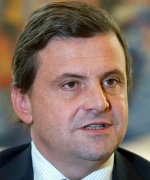
Every week we analyze a politician: promises, misdeeds, personal benefits and costs for citizens.
🔍 Why the system makes them all like this
Before analyzing this politician, we must understand the system they operate in. It is no accident that they all betray their promises. The system expects it.
📜 The legal articles that allow it
Article 67 of the Constitution
"Every member of Parliament represents the Nation and exercises their functions without a binding mandate."
This rule establishes that once elected, a member of parliament is not legally bound to keep their electoral promises. They can change party, position, or opinion without any legal consequence. Their "conscience" is the only constraint.
Article 68 of the Constitution
"Members of Parliament cannot be held accountable for opinions expressed and votes cast in the exercise of their functions."
This rule guarantees immunity for statements and votes expressed in Parliament. Even if statements are misleading or contrary to public interest, the politician cannot be prosecuted.
Verify on the official source:
Senato della Repubblica - Art. 67
|
Senato della Repubblica - Art. 68
📚 The theories that explain the system
Gaetano Mosca (1896) — In every society, regardless of the form of government, there is always an organized minority that governs an unorganized majority. Democracy does not eliminate this structure, it merely hides it.
Vilfredo Pareto (1901) — Elites circulate, but the power structure does not change. The people do not govern: only the group of elites occupying the government position changes.
Robert Michels (1911) — Even parties born to represent the masses inevitably end up being controlled by a small circle of leaders. Internal party democracy is an illusion.
"Who says organization, says tendency to oligarchy."
📊 The data that confirms the theories
These are not academic speculations. The data shows the system works exactly as described:
- Over 90% of the funding of Giorgia Meloni's party comes from contributions paid by MPs themselves, not from the general public.
Source:
Camera dei Deputati - Bilanci partiti
- The French government has spent over 2.5 billion euros on external consultants since 2017, a 329% increase in six years. McKinsey supported Macron's campaign in 2017 and then obtained government contracts.
Source:
Senato Francese - Rapporto McKinsey
- German Chancellor Scholz has been summoned multiple times as a witness by the parliamentary inquiry committee for the Cum-Ex case, a multi-billion euro tax fraud.
Source:
Bundestag - Commissione Cum-Ex
- 18.6% of Italians are at risk of poverty. 9.1% of families are in energy poverty (14.6% on the Islands). 25.6% cannot cope with unexpected expenses.
Source:
ISTAT - Rapporto povertà
When a politician betrays electoral promises, it is not an individual accident: it is the inevitable product of a system designed to ensure that the elite in power continues to govern. Articles 67 and 68 provide legal protection. The theories of Mosca, Pareto and Michels explain the deep mechanism. It is not the individual politician who is the problem: it is the system.
⚖️ confronto_titolo
confronto_intro
1. XQXQ
Personal Sovereignty says no one can decide about your life instead of you. Calenda has never been elected head of a government. He never had the majority to implement his program. Yet, for years, he has promised things he knew he could not maintain: minimum wage, debt reduction, youth detaxation, justice reform. Every betrayed promise is a decision made in your place — or, worse, a teasing. He managed by Minister for Economic Development (2016-2018): Ilva di Taranto, Alitalia, Interporto di Nola. Decisions affecting the lives of thousands of workers. And he took them without consulting citizens. Like all the ministers. In our system, you are the source of power. In his, power is an armchair that is conquered with appointments, not with consent.
2. Equal Dignity
The same Dignity says: everyone is born equal, with the same material rights. Period. Calenda is the son of economist Fabio Calenda and director Cristina Comencini. He studied in elite schools. He worked in Ferrari, Sky, Confindustria. He earned €60,000 per year as a manager. He held high-level public positions. It's not a demerit. It's a privilege. While he built this career, 48.2% of women have an involuntary part-time. 43.7% of young people (15-34 years) are employed, against 50.2% EU. Over 1 million young people left Italy. 13.8% of the South is unemployed. 9.1% of households are in energy poverty. His "equal dignity" is a two-speed dignity: one for those who have studied elite and worked in Ferrari, one for those seeking work for ten years. In our system, no one is born with privileges. Everyone is born sovereigns.
3. Sovereign Consent
The Sovereign Consensus says: no one can be minority. If a decision doesn't suit everyone, we keep discussing. Calenda broke up with the PD. He broke up with Renzi. He broke up with the third pole. He broke up with whoever didn't think of it like him. His political history is a sequence of breaks. He's not looking for consent. Look for ideological purity. And who disagrees is an opponent. In our system, even one citizen who says "no" blocks everything. Because between rulers you do not win and you do not lose: you decide together. Calenda broke up with everyone. We want no one to be minorityed.
4. XQ
The Immune System serves to prevent a man from taking power. Immediate revocation, draw, incompatibility, short and non-renewable mandates. Automatic mechanisms, not good intentions. Calenda has managed the Interporto of Nola, afflicted by "giant financial problems". He ran the Ilva of Taranto, sold "what costs." He managed Alitalia, closed negotiations before the elections. All decisions taken without control mechanisms. No draw. No revocation. No incompatibility. And the funding of Action? 1.5 million € of 2xmille. Public money. The 2xmille is a choice of the taxpayer, but it is still public money that goes to a party. And Action has no parallel foundations like Renzi, but has a tread of 1.7 million € of liquidity. Michels, a hundred years ago, had foreseen all this: the ferreous law of oligarchy. Every organization inevitably produces an elite that dominates it. Action is no exception. Calenda is no exception. It is the living confirmation of the law.
5. Sovereign Coin
The Sovereign Coin says: money is a public service, not a commodity. The Community issue it without debt. Private banks do not exist. Calenda never talks about this. He doesn't say where the money comes from for his policies. He doesn't say who finances his ascent. He doesn't say if he wants to break down the power of the banks or leave it intact. In fact: he worked in Ferrari, Sky, Confindustria — all private companies. He earned €60,000 per year as a manager. And now he lives 2xmille. Inconvenient question: who pays his campaign? Who benefits from his policies? As long as he doesn't say, his "subrase" is only rhetoric. In our system, the money is transparent and plotted. In its, it remains in the shadow — even when it is declared, because no one explains why.
6. Self-sufficiency
Self-sufficiency says: a sovereign people produces what consumes and consumes what they produce. Energy, food, technology, defense. Material addiction, not flags. Calenda says he wants a "superana" Italy against the sovereignism. But then it keeps Italy inside NATO, within the EU, inside all predatory systems that make it dependent. The energy? We import gas and oil. The food? We depend on multinationals. Technology? We depend on the United States and China. What about the guns? Calenda is explicitly atlantist and favorable for sending weapons to Ukraine. He claimed: "We went to Ukraine every year because we know that there we fight for Europe." This is not sovereignty. It is subordination disguised as atlantism. Vannacci says: "Let's change master." Meloni says: "We stay with the current master." Crosetto says: "We sell weapons to all masters." Salvini says: "Navy boy!" — but he never did. Schlein says: "Defensive weapons" — but does not say "no" to weapons. Magi says: "Weapons to Zelensky, otherwise we're not in the wide field." Count says: "No to the rearmament" — but supported Draghi. Renzi says: "I do business with Bin Salman." Calenda says: "We go to Ukraine every year." None of them say: "We have no masters." We do.
7. Time of Life
The Time of Life says: the only criterion that counts is the quality of time you spend on this earth. Not GDP, not productivity, not war. Calenda promised the minimum wage. Never approved. He promised the debt reduction. Never implemented. He promised the detaxation of young people. Never implemented. He promised justice reform. Partial, but not because of you. He promised "More Europe." The EU is self-sustaining. Meanwhile, 48.2% of women have an involuntary part-time. 43.7% of young people are busy. 13.8% of the South is unemployed. 9.1% of households are in energy poverty. Over 1 million young people left Italy. This is his legacy: unmaintained promises, a 2xmille party, and a career built on the elite. The time of Italian life was stolen twice: first to pay taxes, then to pay the bill of promises never kept. In our system, free time is the supreme criterion. Every hour spent working in a precarious contract is an hour of stolen life.
8. The politician as a school case
If Moscow, Pareto and Michels wanted an empirical case for their theories, they could not find him better than Calenda. Moscow said that in every society there is a political class that governs the disorganized majority. Calenda is a member of this class: son of intellectuals, elite studies, career in Ferrari, Sky, Confindustria. He spent all his adult life in the system — first as manager, then as politician. He is not a man of the people. He is a power professional, son of a system he learned to use to conquer and maintain power. Pareto said that the story is a cemetery of aristocracies and that the elite circulate. Calenda is the perfect example: the managerial elite that, after the season of Civic Choice and PD, recycled into centrist elite with Action. His ascent is not a revolution. It's elite circulation. Power changes shape, but remains in the same hands. Michels said democracy inevitably produces oligarchy. Calenda is the confirmation: a man who broke up with everyone, who created a party that lives of 2xmille, who never ruled but claims to speak for the country. His strength does not come from the people. It comes from its network of reports and public funding. It is the very definition of oligarchy: the government of few, for few, without the consent of the most. The fundamental difference: we want to disconnect the ferreous law of oligarchy. Calend the incarnation. And the fact that its 2xmille live party is proof that the system is designed to allow it.
9. The vote that brought you here
If you voted for Calenda or for Action, know that you have abdicated sovereignty. You gave him your power. And he, once elected, is free to do the opposite of what he promised you. It is the Constitution itself that allows it. Article 67: "Every member of Parliament represents the Nation and exercises its functions without a mandate. "
→ Translated: electoral promises are ragged paper. He can betray you, legally. Article 68: Parliamentary immunity.
→ Translated: If you commit crimes, you need permission from your colleagues to process it. Together, they form the shield of Casta. The first one lets you betray. The second protects you while you do it. Calenda betrayed the minimum wage. He betrayed the debt reduction. He betrayed the detaxation of young people. He betrayed justice. He betrayed "More Europe." Five promises cheated on five. And the Constitution protects him. In Community of Sovereigns, all this does not exist. No immunity. No warrant without constraint. Who's wrong pays. Those who betray laugh. And who presents himself with a program that will not keep is not even allowed to do so. Because there are no elections. There are no campaigns. There are no promises. Only decisions taken together, as a peer, without masters.
Conclusion
Calenda is not a political opponent like others. It is the anti-Community of Sovereigns in its most elitist form. Every principle is the denial of our principle: He wants the hierarchy. We equality. He wants the majority crushing. We are unanimity. He wants the boss. We the mechanisms. He wants propaganda. We are the truth. He wants the past. We're the future. He promised the minimum wage. Never approved. He promised the debt reduction. Never implemented. He promised the detaxation of young people. Never implemented. He promised "More Europe." The EU is self-sustaining. He promised justice reform. Partial, but not because of you. And while he did all this, he earned $60,000 per year as a manager, he lived 2xmille, and he built a career on the elite. Community of Sovereigns is the only possible answer. Not because it's perfect, but because it's the only one that doesn't reproduce the twists of the past. Calenda is the past that returns. We are the future that has yet to be born. The choice is clear. And it doesn't admit neutrality.
The Third Polo: an announced break
In 2022, Calenda and Renzi signed an agreement for the "Terzo Polo" — a unique list of Action and Italy Viva, in opposition to both the centre and the centre. The goal: exceed 10%, become the needle of the balance, and bring Dragons to a second term. The result: 7,79% at the Chamber, 7,73% at the Senate. Under expectations. And Draghi already said he wasn't available for a second term. In 2023, the breakup: Calenda accuses Renzi of unreliability. Renzi accuses Calenda of no longer having a parliamentary group ("he had ten in the Senate, now he's only in the mix"). Renzi: "Calenda doesn't go right because they don't even follow him in the family." Calenda: "You are begging to be loaded on board by Schlein, Count, Bonelli and Fratoianni after boasting that you sent home Conte." The result: two parties that hate each other, a failed alliance, and no alternative to the system. Exactly what the system wanted. In Community of Sovereigns, this would not be possible. There are no alliances. There's no breakage. There are no chairs. Only sovereign citizens who decide together, as a peer, without masters. And no one can betray their trust, because there is no trust to betray: there is only consent, every day, on every decision.